Saturday, 19 September 2015


 WEEK 10 MODEL AND CONCEPT


MODEL WERE MADE ON A 1:1 SCALE TO GIVE A FEEL A THE REAL OBJECT.


CONCEPT


WEEK9 Exploring Movement

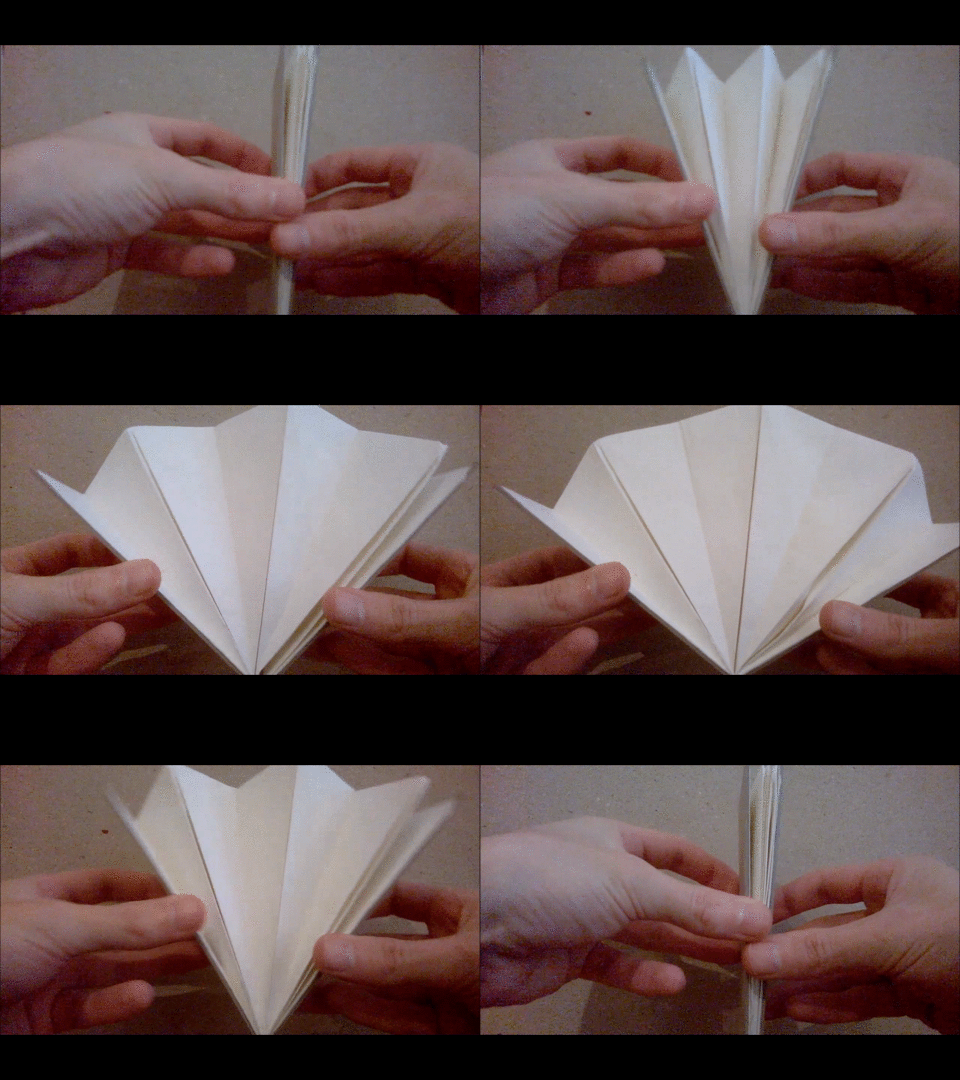
For my interaction design I am using motion as the primary feedback. As the user performs a stretching routine the object will stretch in response, when the user relaxes between stretch repetitions the object will contract, mimicking their movements and providing auditory alerts to indicate how long to hold each stretch for.

Using paper sketch models I explored ways of movement that would be suitable for the particular types of stretch being performed.


Horizontal Linear Movement


 Movement across 2 Axis


 Expanding Outwards & Enlarging 


Expanding Outwards


My aim is to find a shape that's aesthetically pleasing to the user when it's in both expanded and contracted forms, and also transforms and moves in a way that's suitably reflects the particular stretches being performed. I will also need to develop a system of gears to turn rotation into the particular object movement required.

-Darcy Storr

Saturday, 12 September 2015


Reading 1

The messaging kettle Margot Brerenton

The idea of the messaging kettle was to create a new type of communication way that was made possible thanks to interactive technology to assist and support elderly people. The ideas were to maintaining or forge social connection as well as active healthy lifestyle focusing on fostering social engagement rather than monitoring elderly person life.
This reading helped as it raises the importance of using common product that elderly are used to use on a daily bases. This is a good point because elderly are already familiar with those product and don’t have be introduce with new technology therefore there is an already existence connection. Prototyping is mentioned as it is a very important task to do; you can successfully gain valuable feedback from it, better understanding of what users prefers in terms of interaction and what they are more comfortable with.
 The salient point understands the users’ routines and habits, how do they use this particular product and what they are already familiar with. Designers needs to paid attention to these points and then design interaction that revolves around it.
To conclude the thinking behind this article is that elderly people may accept new technology easier if it is part of their already existing and familiar product experiences.

This reading really make me think of how I can make a product that people are familiar with and at the same innovate with so that I know that they have a familiar connection with and yet still be able to achieve a better sleeping experience for my user.


Reading 2
On the ground running: Lessons from experience design Greenfield, A. (2007).

There are a lot of product now that do no longer function as an isolated entity, now many product are being introduce and integrated into part of a network. This raised new type of problem for designers as product that are in a network are dependent from one to another.
The article provide an example where the designer give a poor amount of consideration into the dimension of time and how it affect the product component in the ecosystem, this resulted as a design experience failure. As a result if one component in the system is revisited or one component is the system fails it can compromise the all eco-system as all components are connected and affect one another.

This reading is more about how can our products can interact with each other without being too much or obtrusive. This reading really makes you realize how important it is as well as how invisible it is and yet is the products are not connected smoothly the all design experience can fail as a group.


Reading 3

PEOPLE AND PROTOTYPES, Design Interactions
BILL MOGRIDGE

This article talks about the interactive design, the experience design and the design process involved. This article demonstrates how designers can utilize technology and new technology to integrate in product or interactive products with the purpose of enhancing the users experiences. In the aid of design development, designers are able to harness important and explicit knowledge to ably for the end products. Interactive design and service design do come with constraints as they are new field, these added a significantly big potential to create new connectivity from objects to users and services. This new ways have affected design in sociological aspect such as, how design can be used as a tool to connect people with services or on a social aspect.
The advances of the internet   has created many design problems and solutions design, as being connected to a product system can bring a lot of constraint and add complexity  to a designers. Understanding relevant constraint in user experience the best way to achieve a full understanding is to do observational research of the user in question, simulating the experience or acting it out. These observations will allow you to find the needs and the wants of the users, their preconceptions, mental models and expectation; these facts will help to come up with design ideas, creative leaps and first solution. Constrains are key to understanding a design problem, designers are enabled and controlled by the constraints that they come to understand.
Experience prototypes is essential as it brings derive insights into existing experiences, investigating design ideas and communicating design concepts.  Prototyping an experience is focused on the conceptual experience of the user. Thanks to experience prototyping, it can be used to explore, evaluate and communicate design ideas during the development process, and to gain a better development of the user experience and the tangible components which create it as well as eliminating some flows to narrow it down to final products. By directly experiencing a prototype a client, a colleague, or a user can straight away understand the subjective value of the design idea allowing those interaction to critique about it for potential further improvement. Human factor trial with experience prototypes allow quick evaluations of a wide range of design concepts and the key to a successful experience design is to combine the user testing with the rapid prototypes. There are others way to communication and experience prototypes such as sharing a video with the goal of learning new experiences with an audience, to avoid the designer to design for himself experience prototyping with the intended user group can be a great help.
Interactive product design is where the physical product is integrated with the electronic hardware and software, people are interacting with ubiquitous computing devices that sometimes user don’t think of them as machines at all but rather as a product that is responsive or even intelligent in some ways. There are two ways where physical object and electronic hardware and software can be integrated in a product. One is a screen is embedded in the product the designer must consider the relationships to physical controls and the overall form factor. Two in the absence of a screen the designer can rely on ambient feedback, using light, sounds or movement. Where the physical object is kept as simple as possible, the interactive is more about the experience. By understanding the perceptions, circumstances, habits, needs and desired of the user a successful interaction design can be achieved.

Jeremy.C

WEEK 8 The Messaging Kettle

Reading
The Messaging Kettle
Margot Brerenton

The messaging kettle is an example of new and novel ways of emotive communication that are made possible through interactive technology, and assist elderly people in maintaining social connections and active healthy lifestyles. The design focuses more on fostering social engagement rather than just monitoring of an older persons welfare.


The method of augmenting and enhancing an existing routine is similar to this semester’s project, and many design issues raised are applicable;


  • The design approach stresses the importance of using “habituated” objects that an elderly user is already familiar with, rather than introducing a completely new technology into their lives. 
  • Social communication can be intertwined with habitual use of objects, and tasks and gestures associated with the ritual. A context aware approach to interactive product design is a good way for designers to create new experiences without complicating them.
  • The use of prototypes in the case study were successful in gaining valuable feedback from intended users, and exploring preferred interaction modalities.

  • The salient point raised in the reading is the attention paid to design interactions around existing habits and routines, using a product the elderly users are already familiar with.

  • Testing using prototypes revealed how the test users wanted an assortment of ways to customise their experience, drawing attention to how interaction designers need to create experiences with some fluidity that can be tailored to the individual user to some degree.This is a good example of design in use, and prototype testing as a technique for refing and developing design ideas. 

  •  Older users may be more receptive to new technology if its embeded in a familiar object or experience.


-Darcy Storr


Tuesday, 8 September 2015

WEEK 7 Designing Experiences


Conceptual Framework for Interaction Design


Successful Experience Design


Four different ‘pleasure types’ to consider when designing experiences: physio pleasure, socio-pleasure, psycho-pleasure and ideo-pleasure.

Physio-pleasure - Pleasure derived from the senses from touch, smell, sensual pleasure etc. 

 
Socio-pleasure - Pleasure gained from social interaction with others. The aspect of an experience focused on socialisation, and social identity etc


Psycho-pleasure - Cognitive or emotional pleasure. The aspect of a designed experience relating to the satisfaction derived from successfully completing a task, and how intuitive or usable a product is.


Ideo-pleasure - Something that is consistent with a users values, meaningful to them.
This is the most abstract pleasure. In terms of products, it is the values that a product or experience embodies.


Tiger, L. (2000) The Pursuit of Pleasure.Transaction Publishers

Understanding what the user finds pleasing, their values and ideals allows the designer to focus aspects of the design to cater to them and create more pleasureable experiences.

Using the interaction design framework, the pleasure types vocabulary, and having a through understanding of the design constraints through research aids the designer in creating an engaging experience for the user.

Designing Engaging Experiences 

5 Key elements for engaging experiences

Identity Authenticity is required for identity, this is related to ideo-pleasure. How the values a product or experience embodies reflect the user identity.

Adaptivity The fluidity of an experience. How it can adapt to meet a particular users requirements and be experience at different levels of skill and enjoyment, and how the experience can be changed over time to increase engagement.

Narrative The structure of an experience and the way it is navigated by the user. The combined actions and reactions that form the experience and occur over time.

Immersion Narrative flow and sensory engagment affect how immersive the experience is.

Flow The sense of smooth movement between each successive action that form the experience.The level of product usability and intuitiveness affect the flow of an experience.

Shedroff, N. (2001) Experience Design. Waite Group Press


User experience is concerned with the overall quality of the process which includes the role of emotions and their impact on interaction - nowadays people want more than functionality and efficiency, they also want interaction that is pleasurable.

-Patrick Jordan, Designing Pleasureable Products (2003)

-Darcy Storr

Friday, 28 August 2015

WEEK 6 Design Interactions: People and Prototypes

Reading
Designing Interactions. Chapter 10: People and Prototypes
Bill Mogridge

"When we are designing connected systems of products,services, and spaces, which are used in real time, the brain of any designer who tries to absorb all of the constraints is likely to explode."

The reading stresses the importance of comprehensively understanding all the tasks associated with an experience in order to better design interactive products and experiences.

The importance of understanding the user experience
Understanding relevant constraints; the latent needs and wants of the users, their preconceptions, mental models and expectations is best achieved through observational research of a user experience and the acting out or simulating the experience by the design researcher. Designers have the ability to harness tacit knowledge rather than being limited to working with explicit knowledge. The constraints of a design problem can be absorbed by the subconscious mind of the designer so find solutions.
Often, the designers tacit knowledge and understanding of the problem can help them conceptualize design ideas, make creative leaps, and find first solutions.

Experience prototyping for design development
Prototyping an experience is focused on the conceptual experience of the user, it is used to explore, evaluate and communicate design ideas during the development process, and to gain a more informed development of the user experience and the tangible components which create it.
Experience prototyping lets a client, design colleague, or a user understand the subjective value of a design idea by directly experiencing it, and prototyping with the intended user group also helps the designers avoid the trap of designing for themselves.

Human factors trials with experience prototypes allow quick evaluations of a wide range of design concepts, and the combination of user testing and rapid prototyping is a key to successful experience design.


"An effective experience prototype requires a level of resolution and functionality such that it can be “let loose” into an everyday context and more fully integrated into people’s lives."


Applicable to this semester project;

  • Successful interaction design is dependent on understanding the perceptions, circumstances, habits, needs, and desires of the ultimate users.

  • The practice of designing interactions is enabled by prototyping early and often by trying out ideas as quickly and frequently as possible, and by taking them to the users for responses and evaluations.

  • Using Arduino to prototype, we are able to quickly develop and test subtle iterations of product behaviours and user experiences.
  • Constraints will be identified through looking at the full context of the design problem, not just the people involved.
  • Prototype early and often, making each iterative step a little more realistic but minimizing the time and effort invested each time, relying instead on the learning that feeds your subconscious each time you try.
  • When designing a new version of something that is already there, the designer  can research what has been done before, learn the lessons from previous attempts, discover guiding principles, and extract knowledge from the precedents.

"We can generalize the interaction design process with these ten elements:  constraints, synthesis, framing, ideation, envisioning, uncertainty, selection, visualization, prototyping, and evaluation."
 
-Darcy Storr